
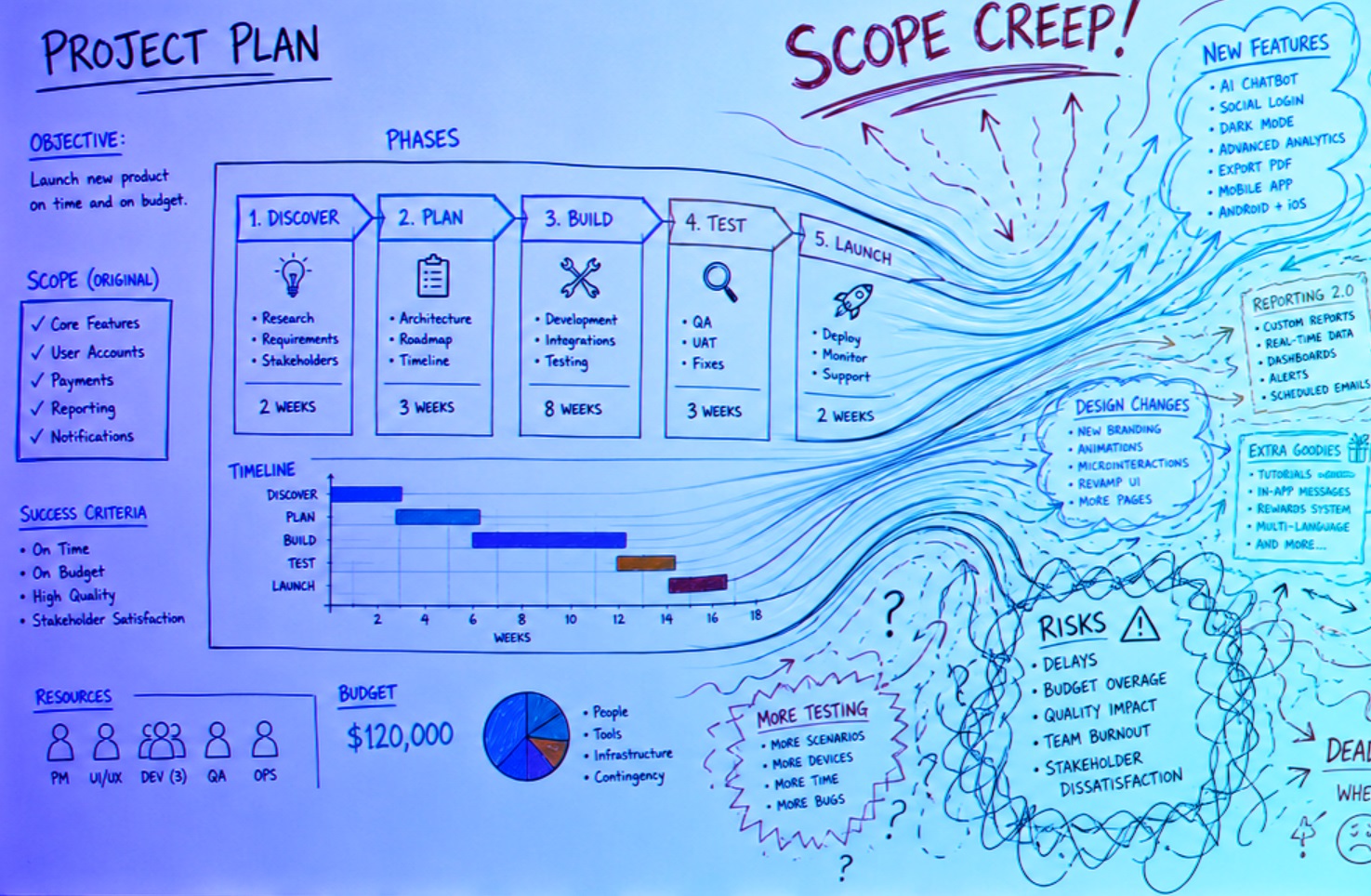
Successful application development, especially within platforms like Quickbase often creates the perception that “anything is possible.”
While this is largely true from a technical standpoint, it is critical to balance capability with practicality, prioritization, and long-term stability.
At the core of any successful deployment is the delivery of a stable, scalable, and functional application. These foundational elements must take precedence over highly complex or development-heavy enhancements, particularly during initial build and rollout phases.
Attempting to introduce advanced features too early can compromise system performance, delay timelines, and increase overall project risk.
As clients begin to interact with a system during development, it is natural for additional ideas and requests to emerge. While these requests are often well-intentioned and may seem minor in isolation, they can collectively introduce scope creep – incremental changes that expand the original project scope beyond its intended boundaries.
What appears to be a simple adjustment can have downstream impacts on design, testing, integration, and delivery timelines.
To maintain project alignment and ensure successful outcomes, it is essential to:
- Set clear expectations early regarding what will be delivered and when
- Prioritize core functionality and system stability over non-essential enhancements
- Establish structured change management processes for new requests
- Communicate the impact of changes on timeline, cost, and overall delivery
By reinforcing these principles, teams can protect the integrity of the project while still allowing for future enhancements in a controlled and strategic manner.
The goal is not to limit capability, but to ensure that development progresses in a way that is sustainable, predictable, and aligned with long-term success.